No products in the basket.
Browse our range of gas stoves, designed to provide a real flame and controllable heat without the fuel loading, ash and cleaning associated with a wood-burning stove. They can be a practical choice for customers who want the appearance of a traditional stove with simpler everyday operation.
Our collection includes traditional and contemporary designs from Arada, Gallery, Parkray and Capital. Selected models are available for natural gas or LPG, with manual and remote-control options across the range.
Showing all 16 results


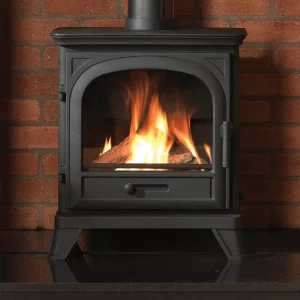


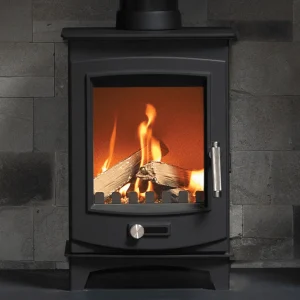

A gas stove burns natural gas or LPG around a decorative fuel bed, creating a genuine flame through the viewing window. Ceramic logs, coals or other fuel-bed materials are arranged inside the firebox to give the appearance of a traditional solid-fuel stove. The flame and heat output can be controlled without adding logs or clearing ash. Depending on the model, operation may be through controls on the appliance or a remote handset that allows the flame height and heat to be adjusted from the room. Combustion gases are carried safely outside through the flue system specified for the stove.
Our gas-stove collection includes different sizes and designs for traditional fireplace openings and more contemporary interiors.
The Arada range includes the Ecoburn Gas Medium and Holborn Gas Medium. These models combine familiar stove proportions with large viewing windows, adjustable flame settings and remote control. Natural gas and LPG versions are available, together with conventional and balanced-flue options.
Our Gallery collection includes the Firefox 5 and Firefox 8, Classic 5 and Classic 8, Helios 5 and Darwin gas stoves. The range covers compact and wider traditional designs, making it easier to choose a stove that suits the proportions of the fireplace opening and room.
The Parkray range includes the Aspect 4 Gas, Aspect 7 Gas and Consort range. The Aspect models have larger viewing windows and a cleaner contemporary appearance, while the Consort retains a more traditional stove shape.
The Capital collection includes the Avebury, Bassington Compact, Bassington, Bassington Enamel and Kirkham. These models are available in different proportions and finishes, with realistic ceramic fuel beds and natural gas or LPG options on selected stoves.
When comparing models, consider the overall dimensions, viewing-window size, heat output, efficiency and control method. Check the individual product specification before ordering.
Looking for another type of stove? Browse our complete stove collection.
Most customers with a mains gas supply will require a natural-gas model. LPG versions are available for selected stoves and may suit properties supplied by bottled or bulk propane. Natural gas and LPG appliances are not automatically interchangeable. The correct version must be selected for the property’s fuel supply, and any approved conversion must be completed by a suitably qualified Gas Safe registered engineer.
A conventional-flue stove normally connects to a suitable chimney or approved flue system. The chimney must be checked to confirm that it can carry combustion gases safely outside.
A balanced-flue model uses a sealed system that draws combustion air from outside and releases the gases through an external wall. This can make a gas stove possible in some properties without a traditional chimney, although a suitable wall position and the correct manufacturer-approved components are still required.
Not every stove is offered with every gas or flue option, so check the product details and speak to the installer before ordering.
Gas stoves provide controllable room heat, with the available output varying between models. The most suitable output will depend on the room dimensions, insulation, glazing and general heat loss. A larger stove does not necessarily provide more heat. Compare the stated output and adjustment range rather than choosing by the external size of the appliance alone. Running costs depend on the stove’s gas consumption, flame setting, operating time and your natural-gas or LPG tariff. For a rough estimate, multiply the appliance’s stated gas input in kilowatts by the price you pay for each kilowatt-hour of gas. The nominal heat output and gas input are not the same measurement, so use the consumption or input figure supplied for the individual model when estimating costs. LPG prices and supply arrangements can differ considerably from mains natural gas.
Compare the gas input, heat output, efficiency and controls before ordering.
A gas stove can be positioned within a suitable fireplace opening, placed inside a stove chamber or included as part of a complete fireplace design. It can be used with a brick, slate or tiled chamber, together with a suitable hearth and fireplace beam, to create the appearance of a traditional stove installation. The stove may also be used in a more contemporary setting where the individual model and flue arrangement allow. The appliance must be positioned with the clearances stated by the manufacturer. The fireplace opening, hearth, surrounding materials, gas supply and proposed flue route must all be considered. The available position will depend on the property, selected stove and required flue arrangement. Check the stove dimensions and proposed location carefully before ordering. Final suitability should be confirmed before the stove is purchased.
A gas stove must be installed by a Gas Safe registered engineer who is qualified to work on gas fires and the fuel type being used. It must not be installed or connected as a do-it-yourself project. The engineer will need to assess the gas supply, fireplace opening, hearth, ventilation and flue arrangement. The appliance should then be commissioned and tested in accordance with the manufacturer’s instructions. An existing chimney may need to be swept, inspected or altered before a conventional-flue stove is fitted. A balanced-flue installation must use the components and terminal position approved for the individual model. Gas appliances, flues and associated pipework should be maintained regularly. Arrange servicing in accordance with the manufacturer’s guidance so the appliance continues to operate correctly and safely.
Conventional-flue gas stoves require a suitable chimney or approved flue system. Selected balanced-flue models can be installed without a traditional chimney because their sealed flue passes through a suitable external wall.
Selected gas stoves are available in an LPG version for properties without mains natural gas. Check the individual product specification and order the correct version for your fuel supply.
No. A gas stove must be installed and commissioned by a Gas Safe registered engineer who is qualified to work on the appliance and gas type involved.
Phone
01773 718718
Email
sales@castfireplaces.co.uk


