No products in the basket.
When you are planning a stove installation, one of the biggest decisions is what you put around it. Some people want the simplicity of a fireplace beam above a brick or slate chamber, while others prefer the more substantial appearance of a limestone, marble, wooden or cast iron surround.
There is no right answer for every property. Personally, I usually prefer a limestone or marble surround because I like the way it makes the stove a proper focal point. But the space available matters just as much.
At home, for example, I have a relatively small chimney breast and the television sits in the corner. Adding a beam or full surround would bring the fireplace further into the line of sight, so I have simply used a plain chamber around the stove instead.
The important thing is choosing something that suits the space rather than adding a beam or surround simply because you think a stove has to have one.
A fireplace beam sits above the stove opening rather than framing it on both sides. It is a simpler style that works particularly well with brick, slate and rustic chambers. Beams are available in different finishes too, so they don’t necessarily have to look heavily traditional.
A full surround frames the fireplace opening with two legs and a top section, usually finished with a mantel shelf. It generally creates a stronger focal point and gives the stove a more complete fireplace appearance.
Common materials include:
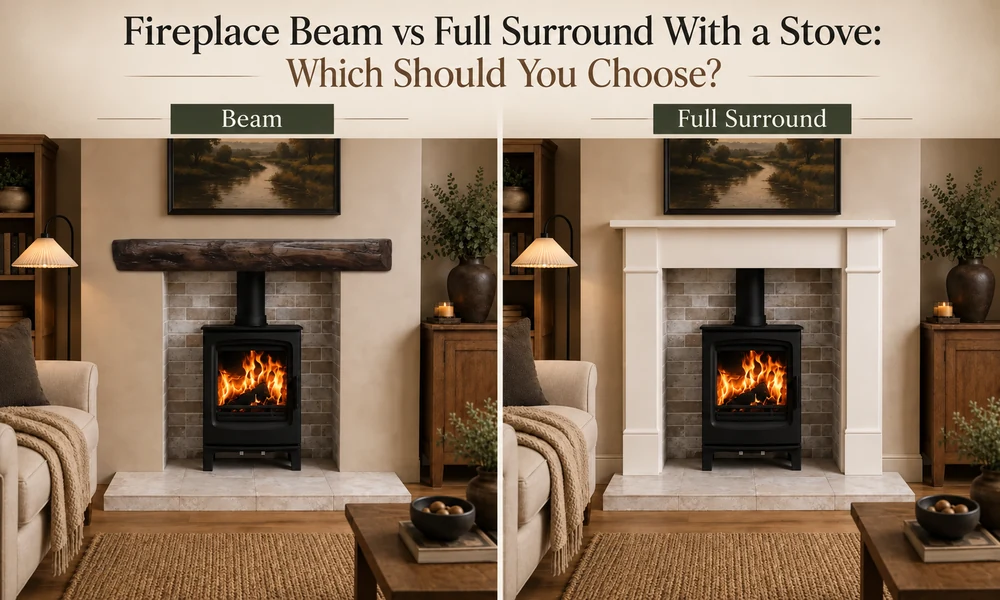
Beams naturally suit more rustic stove installations. We particularly like them in older cottages and properties where the fireplace already has plenty of character. A brick chamber, dark hearth, stove and simple beam can look as though it has always belonged there. They are also a good choice if you don’t want the fireplace to dominate the chimney breast.
We sell beams in a choice of finishes, from more rustic styles to cleaner contemporary designs, so they can work in a wider range of interiors than you might first expect.
Another big advantage is cost. At the time of writing, one of our fireplace beams starts at around £205, whereas our limestone surrounds start at around £535. That is a worthwhile saving when you are also budgeting for the stove, hearth, chamber and installation.
If space allows, I generally prefer the finished appearance of a full surround. Limestone and marble are probably the first materials people think of, but wooden and cast iron designs can work equally well depending on the property. A full surround gives the stove more presence and can make the whole chimney breast feel better proportioned. This tends to work best where there is enough width around the opening for the surround to sit comfortably.
Proportion is important. A large surround squeezed onto a narrow chimney breast can feel cramped, while a small beam or plain opening can sometimes look lost on a wide wall. This is why I would never choose purely from a product photograph. Think about how much space it will actually occupy once installed.
For stove installations, limestone is probably my favourite material. Its natural finish works extremely well with stoves and can suit both traditional and more contemporary interiors.
Marble has a slightly different character and one practical advantage: it is generally very easy to wipe clean. That can be useful around a working fireplace where dust and everyday marks are inevitable.
Wooden surrounds can also be used with stoves, but you need to pay close attention to the required distance from combustible materials.
Clearances depend on the stove, fireplace and installation, so always follow the appliance manufacturer’s instructions and your installer’s requirements rather than assuming one measurement will suit every setup.
Cast iron is another option and gives a much stronger traditional or period feel.
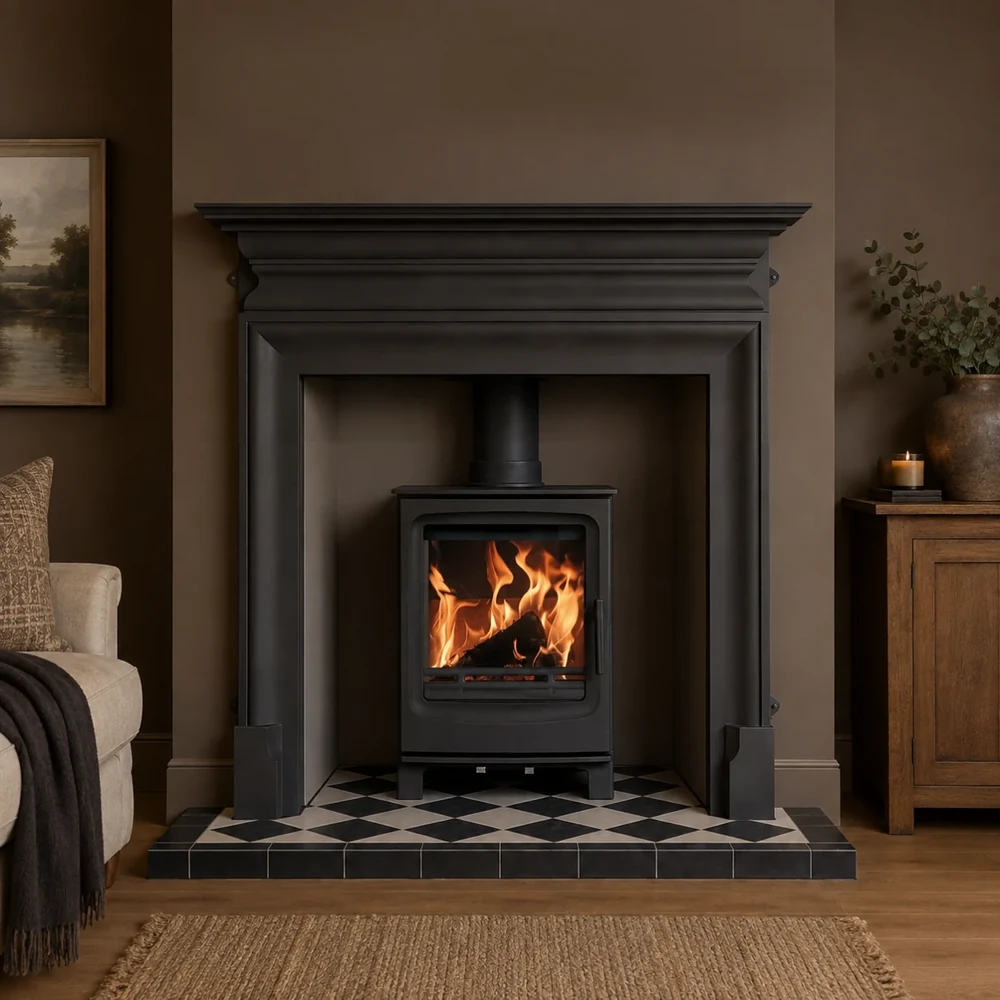
Our Palmerston cast iron surround is a popular choice with stove suites because it creates a real statement around the stove without needing a stone or wooden surround. With the right chamber and hearth, it works especially well in period properties but can also add character to a newer home.
One of the easiest mistakes to make is choosing the fireplace first and thinking about the rest of the room afterwards.
Start by looking at the chimney breast itself.
How wide is it?
How much wall space is available?
Where is the television?
Is there furniture close to the fireplace?
Would a full surround improve the proportions, or would it make an already small area feel crowded?
My own fireplace is a good example of why you don’t always need either option. Because of the size of the chimney breast and the position of the television, a plain chamber gives us the cleanest result.
In a larger space, I would probably choose limestone.
We don’t often see customers completely change their minds between a beam and a full surround once they visit our showroom. Most people already have a fairly clear idea of what they want. Someone who has been imagining a rustic beam over a brick chamber will normally still prefer that when they see it in person.
Likewise, somebody considering limestone, marble or cast iron has usually already decided that they want something more substantial around the stove. Where seeing the products in person really helps is with proportions, colours and deciding which hearth and chamber work best with them.
The beam or surround is only one part of the finished installation. The chamber and hearth have just as much influence on the overall appearance. A rustic beam can feel completely different depending on whether it is paired with red brick, grey brick, slate or a smoother chamber.
A stone or cast iron surround can also be pushed in a more traditional or contemporary direction depending on the materials chosen around it. This is why we tend to look at the fireplace as a complete combination rather than selecting each component in isolation.
Choosing a stove on its own can be fairly straightforward. Choosing the stove, hearth, chamber and surround or beam — and making sure everything works together — can take a bit more thought.
That is one of the reasons we created our Stove Packages.
Rather than building the fireplace from individual components, you can choose a combination where the stove, chamber, hearth and surround or beam have already been paired together. There are options using limestone, marble, wood and cast iron, as well as fireplace beams. The idea is simple: much of the hard work has already been done for you, making it easier to picture the finished installation before you order.
If you would rather build your own combination, you can also browse our fireplace beams and surrounds separately.
If the space allows, my personal preference is usually limestone or marble. I like the way a full surround gives the stove more presence and finishes off the chimney breast. But it is not automatically the best choice.
For an older cottage with a brick chamber, I would quite often choose a beam.
For a more traditional scheme, cast iron such as the Palmerston can work extremely well. For a small chimney breast, I might use neither.
And if budget is important, a beam can still give you a really good finished result while saving several hundred pounds compared with a stone surround. The best option is the one that suits the proportions of the space, the style of the property and the result you actually want.
Phone
01773 718718
Email
sales@castfireplaces.co.uk