No products in the basket.
Browse our range of multi-fuel stoves, designed for customers who want greater flexibility over the fuel they use. Depending on the individual model, these appliances can burn properly dried logs and selected solid smokeless fuels. Although multi-fuel stoves can look similar to dedicated wood burners, their internal combustion systems are designed to accommodate different approved fuels.
Our collection includes traditional and contemporary designs with different dimensions and nominal heat outputs. Entry-level models start at around £500. Contact our team if you need help comparing stove sizes, permitted fuels or fitting requirements.
Showing 1–20 of 95 results


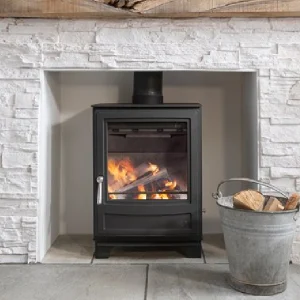
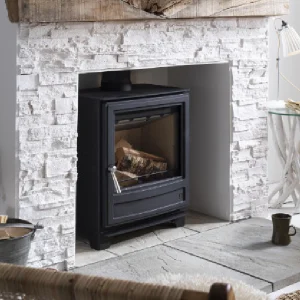
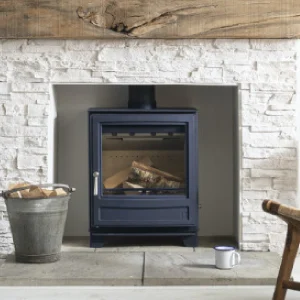
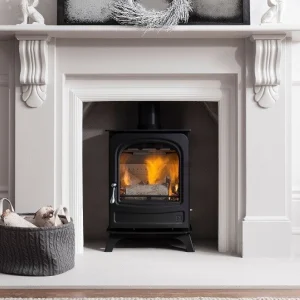
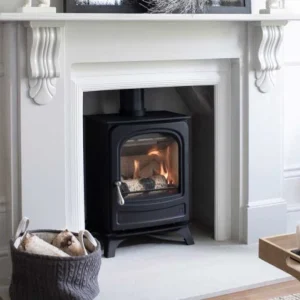
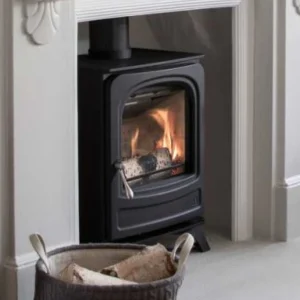


A multi-fuel stove normally has a raised grate that allows air to reach the fuel from underneath. This is particularly important when burning solid smokeless fuel, which requires air to pass through the fuel bed. Ash falls through the grate and collects in the removable ashpan below. Many models also include a riddling mechanism that helps move ash through the grate without disturbing the complete fuel bed.
The grate position and air-control settings may need to be changed when switching between logs and smokeless fuel. Always follow the manufacturer’s instructions for the individual appliance and fuel being used.
The permitted fuels vary between models. Many multi-fuel stoves can burn properly dried logs and selected solid smokeless fuels, but not every type of solid fuel will be suitable. A fuel being described as smokeless does not automatically mean it can be used in every multi-fuel stove. Always check the individual product specification and manufacturer’s instructions before choosing your fuel.
Do not burn treated or painted timber, chipboard, MDF, household waste or anything not approved for the appliance.
A dedicated wood-burning stove may suit you if you intend to burn logs exclusively. A multi-fuel model provides greater flexibility by allowing more than one approved fuel type, depending on the individual appliance. Although the two types can look similar from the outside, their internal combustion systems are designed differently. Always check the product specification rather than relying on the stove’s appearance.
Before ordering, check whether your property is in a smoke-control area. In these areas, you can burn authorised smokeless fuels in a suitable appliance. To burn an unauthorised fuel such as wood, you must use a Defra-exempt stove and only burn the fuels permitted for that model. A stove being described as multi-fuel does not mean that every solid fuel can be burned in it or that every fuel is permitted in a smoke-control area. Always check the individual stove specification and permitted-fuel information.
The Hamlet Solution 7 is on live-fire display in our Heanor showroom and is always demonstrated using smokeless fuel. Customers can see how the fuel burns, how the fire responds to the air controls and how ash is managed during normal use.
One practical reason customers choose a multi-fuel stove is that selected smokeless fuels can provide steadier, longer-lasting heat than logs, reducing how frequently the stove may need refuelling. The actual performance will depend on the appliance, fuel, chimney draw and air-control settings.
During the colder months, our showroom is heated by the working stoves alone. Customers can feel the warmth they generate and gain a more realistic understanding of how a stove performs than they would from viewing an unlit display. We are happy to help customers compare permitted fuels, stove dimensions, nominal heat outputs and fitting requirements before ordering online or visiting our showroom.
Looking for another fuel type? Browse our complete stove collection.
Many multi-fuel stoves are designed to burn properly dried logs and selected solid smokeless fuels. However, the permitted fuels vary between models, so always check the manufacturer’s instructions before use. Do not assume that every fuel described as smokeless is suitable for your particular appliance.
Logs and solid smokeless fuels have different combustion requirements, so the grate position and air-control settings may need to be adjusted when changing from one fuel to another. The correct settings vary between appliances. Follow the operating instructions supplied with your stove to ensure the chosen fuel burns correctly.
Check the ashpan regularly and empty it before the ash reaches the underside of the grate. Excessive ash can restrict airflow and may cause the grate to overheat. Allow the ash to cool and follow the instructions supplied with your stove. How frequently it needs emptying will depend on the fuel being burned and how often the appliance is used.
Phone
01773 718718
Email
sales@castfireplaces.co.uk


