No products in the basket.
Planning a media wall isn’t simply about choosing the biggest electric fire you can fit underneath the television. The fire, TV, wall and room all need to work together.
We’ve supplied plenty of media wall fires over the years, and one of the biggest mistakes we see is people deciding on the fire too late. By that point, the wall dimensions, television position or opening may already have been decided. I’d always choose the fire first.
If you’re still comparing models, take a look at our Media Wall Electric Fires.
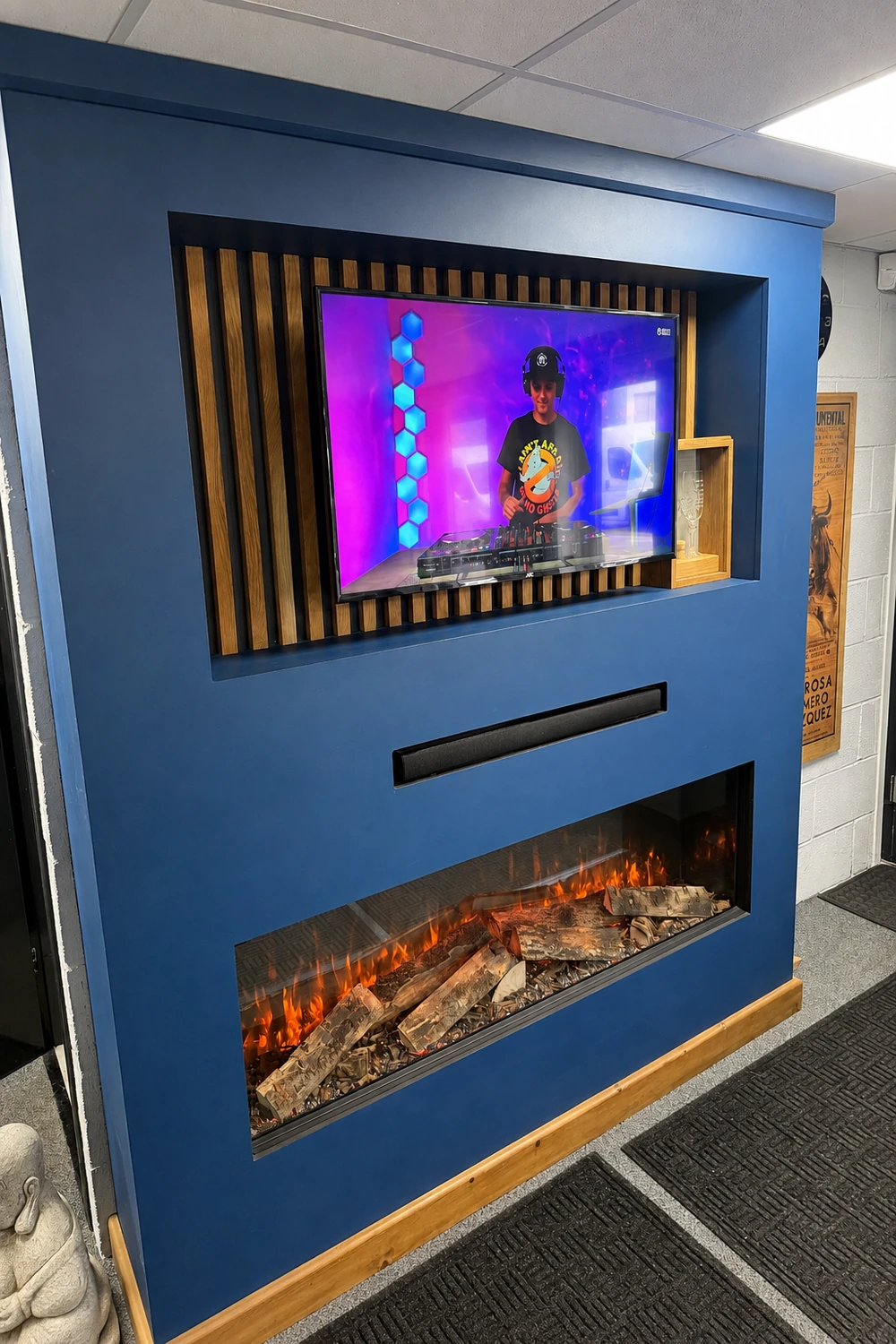
Once you know which fire you’re using, you’ve got the exact dimensions to work around.
That makes it much easier to plan:
It’s much easier to design a media wall around the fire than build the wall first and then try to find a fire that fits the opening you’ve been left with.
There isn’t one fire size or TV-to-fire ratio that works for every media wall. A large fire can look fantastic in a wide room but completely dominate a smaller wall. The opposite can happen with a fire that’s too small underneath a large television. I wouldn’t choose the fire purely from the size of the TV, and I wouldn’t worry about trying to make the fire and television exactly the same width either.
Instead, look at the complete wall:
A fire wider than the television can work really well in some designs, while in others having the two closer in width looks more balanced. Depth matters too. The wall needs enough room for the exact fire you’re using as well as cables, electrical connections and anything else being built into it.
Use the installation dimensions for the individual fire rather than estimating the space required. The important thing is the overall proportion of the finished wall rather than following a fixed rule.
This is another area where I wouldn’t use one fixed measurement for every installation. The TV needs to be comfortable to watch from your normal seating position, while the electric fire needs to be installed in accordance with the instructions for the particular model. Those two things need to be considered together.
Before the wall is built, check the installation requirements for the fire you’re using and work out where the television feels comfortable from the sofa. It’s much better to do that beforehand than discover afterwards that the TV feels too high.
This is something else worth deciding before building starts. A front-facing fire gives you a clean built-in appearance and works particularly well with a straightforward symmetrical media wall. Depending on the Solution model, you may also be able to expose one or both sides of the fire. A three-sided setup can look particularly good where the sides of the media wall are visible from elsewhere in the room.
There’s no right or wrong option. It depends on the shape of the room and how you want the finished wall to look. The important thing is deciding before the opening is constructed.
Most media walls need power for considerably more than the electric fire.
You may have:
Deciding where all of these are going before construction makes it much easier to hide cables and sockets properly. An electrician can then plan the electrical side around the equipment you’re actually going to use. I’d also think about access. Anything hidden inside the media wall that may need to be reached later shouldn’t become impossible to get to once everything is finished.
This is something people don’t always think about until the media wall is finished. A large window opposite the fire or bright room lighting can create reflections in the glass. Depending on the Solution model you’re looking at, anti-reflective glass may be available. I wouldn’t say everybody needs it, but if the room is particularly bright or you’ve got windows directly opposite the proposed media wall, it’s worth considering before you order the fire.
The electric fire already gives you plenty of lighting, but many media walls also include shelving lights or LED strips. Solution also offers scene-lighting options for suitable installations. I’d think about all of the lighting together rather than treating the fire, shelves and surrounding wall separately.
The media wall will probably look very different in the evening than it does during the day, so this is worth planning properly.
Yes. The flame and lighting effects can be used without switching the heater on. That means you can still have the fire running during warmer weather without heating the room. When you do want some extra warmth, Solution fires provide thermostatically controlled electric heating, depending on the model. I’d always check the specification of the individual fire before ordering rather than assuming every model is identical.
Before construction starts, I’d make sure the main decisions are sorted:
You don’t need every decorative detail decided at this stage, but I would have the main products, dimensions and positions sorted. Changing a paint colour later is simple. Changing the fire opening once the media wall is boarded or plastered isn’t.
This is one of those products I’d always recommend seeing in person if you can.
At Cast Fireplaces, we have a Solution LUX 150 running in our own media wall. That gives you a much better idea of how a larger fire looks once it’s actually built into a finished feature wall.
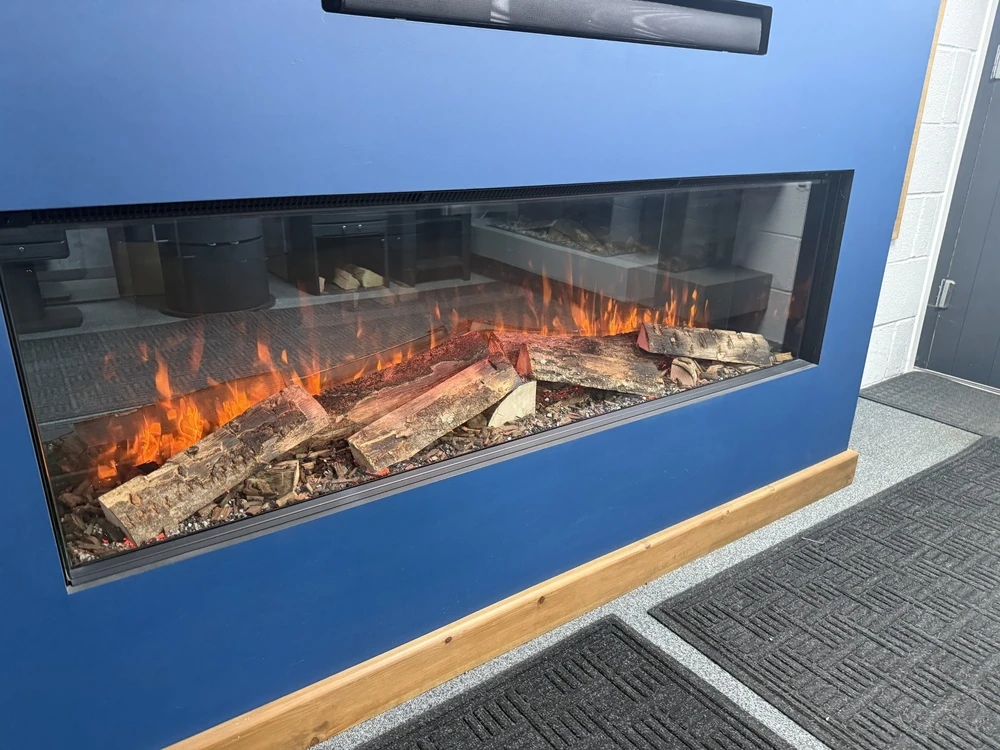
We also have a LUX 100 displayed with the Sheringham suite, so you can compare a different fire size and setting. If you’ve already got a television in mind, bring the dimensions with you. If you’ve got rough room and wall measurements as well, even better.
We can then help you compare the sizes rather than simply guessing which fire is going to look right.
You can also browse our Media Wall Electric Fires before visiting.
Phone
01773 718718
Email
sales@castfireplaces.co.uk