No products in the basket.
A limestone fireplace package brings the main parts of the fireplace together, including the limestone surround, insert and hearth. Choosing a complete package makes it easier to find components that suit each other and create a finished fireplace design. Here are the main things to consider when choosing a limestone fireplace.
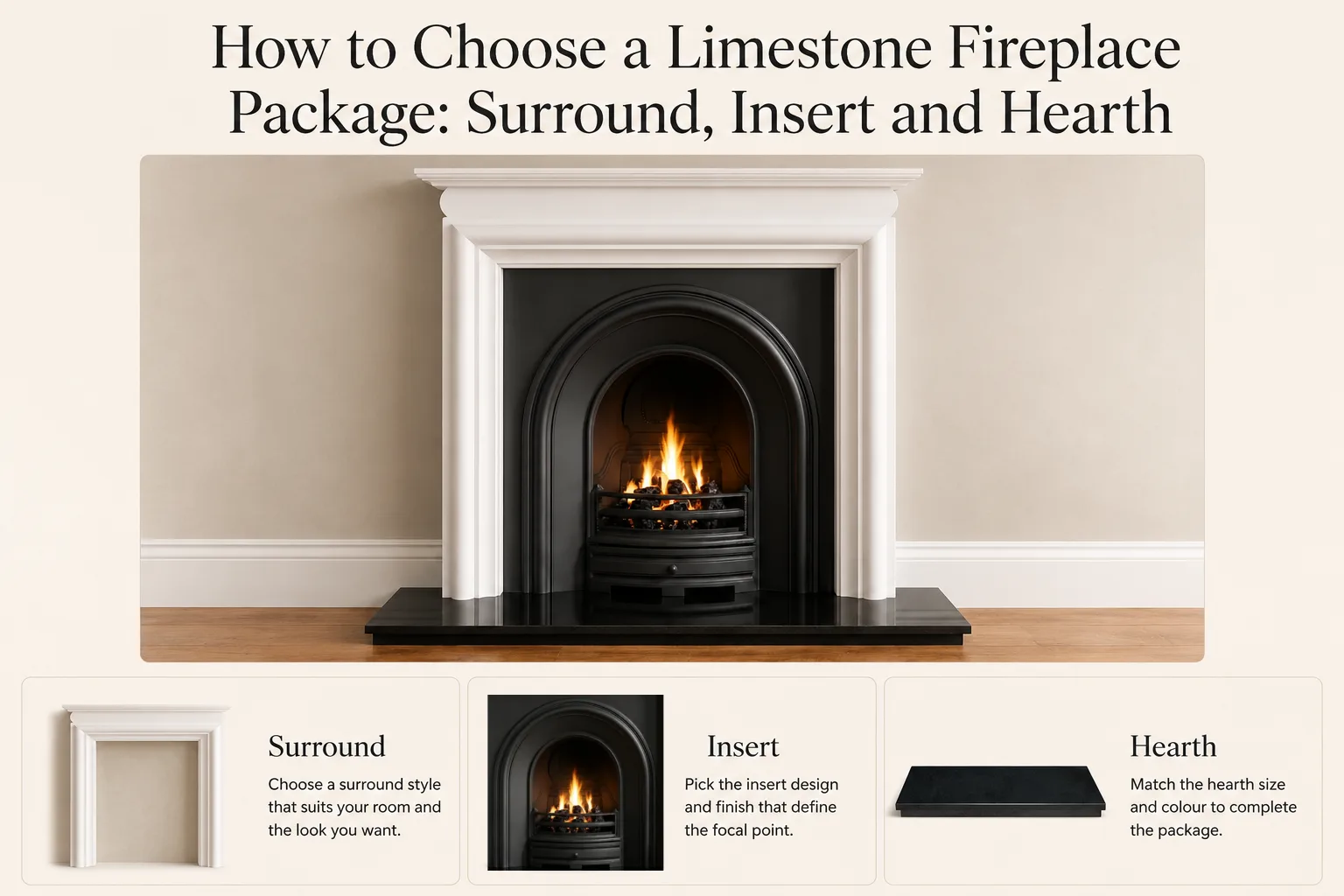
The limestone surround frames the fireplace and has a large effect on its finished appearance. Our limestone surrounds are made from natural stone, which means each one will have its own markings, colour changes and small imperfections. You may also find natural fossils within the stone. These features are part of the character of limestone rather than faults.
Limestone has a soft, neutral appearance that can work with both traditional and more modern fireplace designs.
You can also view our limestone fire surrounds separately if you already have an insert and hearth.
Limestone fireplace surrounds are available in both simple and decorative styles. A surround with clean lines can create a more understated appearance, while carved details, corbels or traditional features can make the fireplace more decorative. Think about the size of the room, the chimney breast and any original features already in the property. The fireplace should look balanced without appearing too large or too small for the wall.
The insert sits inside the limestone surround and creates the centre of the fireplace. Cast iron inserts are a popular choice for traditional limestone fireplace packages. You may prefer a simple arched insert, a more decorative cast iron design, a tiled insert with colour and pattern, or a black or highlighted cast iron finish. A simple insert can keep the limestone surround as the main feature, while a decorative or tiled insert will create a stronger traditional appearance. The detail of the insert should work with the shape and style of the surround.
The hearth sits underneath the fireplace and completes the package. Black granite is commonly paired with limestone because it creates a clear contrast against the lighter natural stone. Depending on the package, other hearth styles may also be available. The hearth must be suitable for the chosen fireplace and fuel type, so always check the individual package information.
Before choosing a package, check the available space carefully. Measure the width of the chimney breast, the height and width of the fireplace opening, the depth of the opening and the available wall space. You should also check the full dimensions of the package rather than looking at the surround width alone. This includes the dimensions of the surround, insert and hearth. Marking the outside measurements on the wall with masking tape can help you picture how the finished fireplace will look in the room.
The available fuel options will depend on the fireplace package and your property. Options may include solid fuel, gas, electric or bioethanol. Before ordering, speak to a qualified installer to check whether your chimney, flue and fireplace opening are suitable for the fuel type you want to use. An installer can also advise whether any building work or additional ventilation is required.
Limestone is porous and should be sealed with a suitable natural stone sealer. Sealing helps protect the surface and reduces the risk of dirt or spillages soaking into the stone. Read our guide on how to seal a limestone fireplace before installation.
For regular cleaning and maintenance, see our guide on how to clean and care for a limestone fireplace.
Once you have considered the style, dimensions, fuel option and stone care, you can choose a package that suits your room. Browse our complete range of limestone fireplace packages. You can also visit our Heanor showroom or contact us for help choosing a suitable design.
Phone
01773 718718
Email
sales@castfireplaces.co.uk